
AISHATU RAMADAN FOOD ASSISTANCE IN NIGERIA 2026 SUCCESS STORY
Aishatu (38, mother, blind from birth, pregnant and lactating woman); her father Umar Maina (approx. 72, elderly, limited mobility); 11 children ranging from ages 2 months to 16 years, including: Falmata (16, eldest daughter, acts as primary caregiver), Modu (14), Zara (12), Aisha (10), Bukar (8), Bintu (7), Kaka (5), Hauwa (4), Yagana (3), Grema (1.5), and the youngest, an unnamed nursing infant (2 months). Her husband, Bukar Modu, was killed by Boko Haram insurgents during the 2014 attack on Baga, Lake Chad region.
OCCUPATION:
Aishatu has never been employed due to her congenital blindness. She cannot navigate the settlement independently and relies entirely on her eldest daughter Falmata. Her elderly father, Umar Maina, who now serves as the household’s sole adult support, does occasional odd jobs when his health permits, but earns almost nothing (typically ₦200–500 on a good day). The family survives entirely on the charity of neighbours and whatever meagre help comes their way.
When we asked Aishatu how she feeds her family, she was quiet for a long time. Her eldest daughter, Falmata, who had been standing beside her holding the baby, answered first.
“Sometimes we eat once. Sometimes we don’t eat at all.”
Aishatu then spoke, her voice low and steady the kind of steadiness that comes not from calm but from exhaustion.
“I have never been employed. I have never earned a single naira in my life. I was born blind. My husband was the one who fed us. When the insurgents killed him in Baga, they didn’t just take my husband they took the only person who stood between my children and starvation.”
She explained that since then, her ageing father has become the household’s sole provider a seventy-two-year-old man with failing knees trying to feed thirteen people.
“My father goes out in the morning and sometimes comes back with two hundred naira, sometimes nothing. He carries loads at the market. He is an old man. His knees shake. But he goes out because if he doesn’t, we don’t eat. I sit here with my children and I pray. That is all I can do. I pray and I wait.”
The challenges are enormous and layered. Food prices in Maiduguri have more than doubled in the past two years. A measure of rice that once cost ₦500 now costs over ₦1,200. Garri, once the cheapest staple, has become unaffordable for families like Aishatu’s. To access to clean water is irregular the community borehole often breaks down, and when it does, Falmata must walk long distance to the nearest functioning water point. The children frequently fall sick with malaria and diarrhoea, but there is no money for medicine or transport to a clinic.
“When a child is sick and you have no money, you just hold them and pray. That is our clinic. My arms and my prayers.”
Aishatu’s blindness makes everything harder. She cannot check on her children, cannot move freely, cannot cook without help. Everything depends on sixteen-year-old Falmata, who has effectively become a mother to her siblings instead of attending school.
“When there is no food, the house changes. The children stop playing. They become quiet. The little ones cry, but after a while even the crying stops because they are too tired to cry, they sometimes go out to beg. That silence when a house full of children goes silent that is when you know things are very bad.”
She described how hunger affects her physically as a nursing mother.
“I am breastfeeding my baby, but some days I have not eaten anything and my body has no milk to give. The baby sucks and sucks and cries because nothing comes. I have never seen the face of any of my children. I have never seen the sky or the food I put in their mouths. But I know hunger. Hunger has a sound. It is the sound of a child turning in the night, unable to sleep because their stomach is empty. I hear that sound every night.”
She added: “When a child is crying from hunger and you are blind and you have nothing to give them—that is the darkest place a mother can be. My eyes have never seen light. But that kind of darkness is worse.”
Aishatu’s face changed when we asked about Ramadan. There was a softness in her expression, a kind of reverence that cut through the exhaustion.
“Ramadan is the month when Allah opens the doors of mercy. I love Ramadan. Even when I have nothing, I fast. I fast because it brings me closer to Allah. When I am fasting, I feel like maybe He is listening to me more closely. Like maybe my du’as are stronger in this month.”
But then the worry crept back in.
“For many years, Ramadan has also been the month I fear the most. Because it is the month when everyone is supposed to eat Suhur before dawn, Iftar at sunset. Every household prepares. But I am blind, I am a widow, and I have eleven mouths to feed. Where will the food come from? My neighbours are poor too. They share what they can, but they are suffering the same way.”
She described her routine: waking long before Fajr, feeling her way to the kitchen in the dark though, as she said quietly, “for me, it is always dark.” On the nights she has something to cook, Falmata helps her prepare a small meal for Suhur. The community in Polo becomes quieter during the day as people conserve energy, and in the evenings the settlement comes alive with the call to Maghrib and the smell of cooking from the houses that have food.
“In the evening you can smell food from some houses. Rice cooking. Stew. And you know which houses have nothing because they are dark and quiet. My house is always one of the quiet ones.”
Throughout the year, the family survives on tuwo (a thin paste made from small amounts of millet flour mixed with water), sometimes with a watery sauce of dried leaves if available. During Ramadan, she tries to ensure the children have something for Iftar, but most days during previous Ramadans, the family broke their fast with water and a few dates donated by neighbours, or money gotten from begging on the street if even that.
“Last Ramadan, there were nights my children broke their fast with only water. Just water. And I sat there and I could hear them drinking, and I thought: ‘Ya Allah, is this all I can give them in your holy month?’ That question haunted me. It still haunts me.”
“This distribution changed things in our community. I am not the only one who was struggling. There are many families here in Muna who had nothing before Ramadan started. When the food packs arrived, you could feel the entire settlement breathe. People who had been walking around with worry on their faces were suddenly smiling. The whole community felt it. For once, Ramadan felt like Ramadan again.”
When the food pack arrived—rice, beans, cooking oil, sugar, pasta, seasoning, and dates—Aishatu could not see it. But her daughter could.
“When I got back home with the food packs my children were screaming. I thought something bad had happened. Falmata grabbed my hand and placed it on the bag of rice. She said, ‘Mama, feel this. It is rice. A whole bag of rice.’ And I just held it. I held that bag of rice and I cried. I couldn’t stop.”
She said her younger children were jumping and clapping, fighting over who would carry the cooking oil. Her father, who had been lying down ill, stood up and walked to the doorway.
“My father said, ‘Alhamdulillah. Allah has not forgotten us.’ He doesn’t cry. He is a strong man. But his voice was shaking.”
Aishatu described the first Iftar after receiving the food pack as the best meal her family had eaten in months.
“Falmata cooked Jollof rice. Real Jollof rice with oil and tomatoes and seasoning. The whole room smelled like food. My children were laughing. I kept asking, ‘Is everyone eating? Is everyone’s plate full?’ And Falmata said, ‘Yes, Mama. Everyone is eating.’”
She paused for a long time.
“I have never been able to see my children smile. But that night, I could hear them smiling. I know what a smile sounds like when a child is eating and they are full. That sound that is what this food pack gave me. It gave me the sound of my children smiling.”
“I have never heard of Islamic Relief before, until the day the workers from IDS came to register our names.”
“No. This was the first time. I have never received anything from any organisation before this. Nobody has ever come to us like this.”
Aishatu’s response was simple
“The food pack was perfect. I would not change anything. But if I could ask one thing: can you make it happen more than once? One month of food saves us for one month. But the hunger comes back. If there was a way to help us even two or three times a year, it would change everything. But even this one time even this was more than we ever expected.”
When asked if she had anything else to say she said:
“I don’t know who these people are. But I want them to know: a blind woman in Muna is praying for them every single night. Me and my children, we pray for them at every Iftar. May Allah reward them the way they have fed us. May He never let their children go hungry. May He protect them and their families.”
She reached for the interviewer’s hand.
“Just don’t stop. Please. Don’t forget us. That is all I ask. Don’t forget us.”
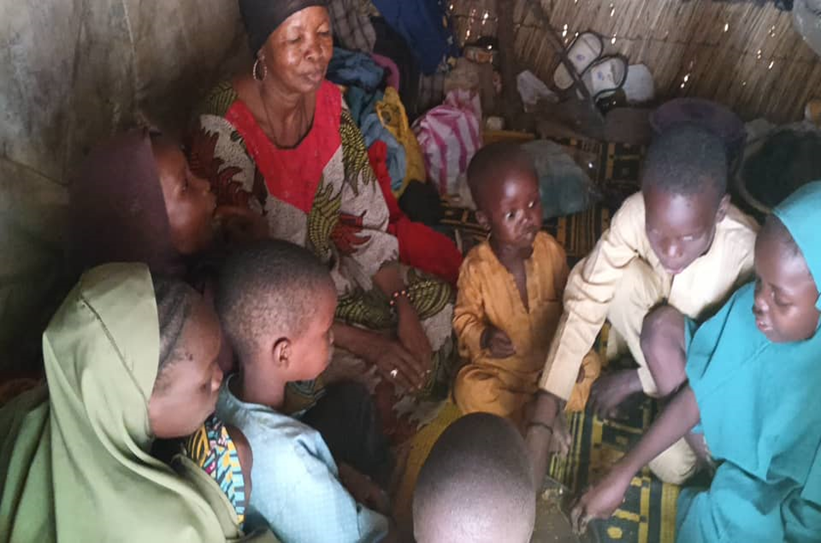
Aishatu with her Children during IDS/IRW Post Distribution Monitoring
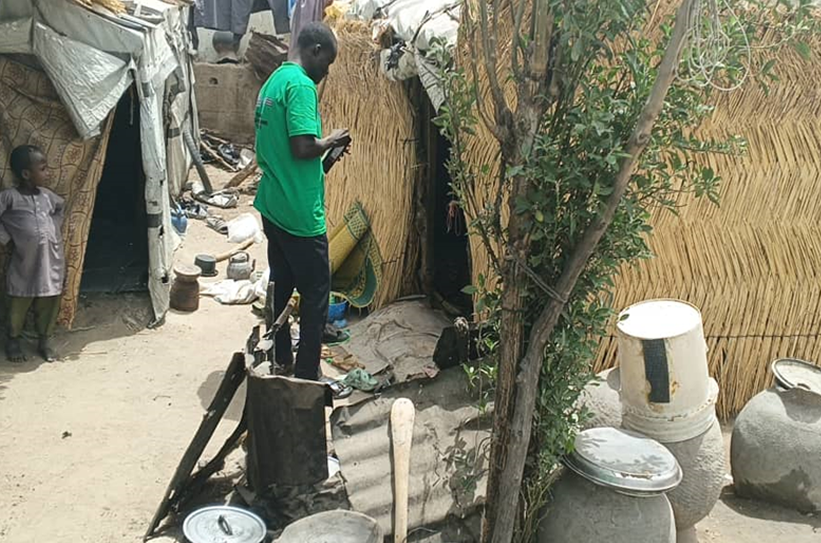
IDS Team at the IDPs Host Community Resident of Aishatu in Maiduguri
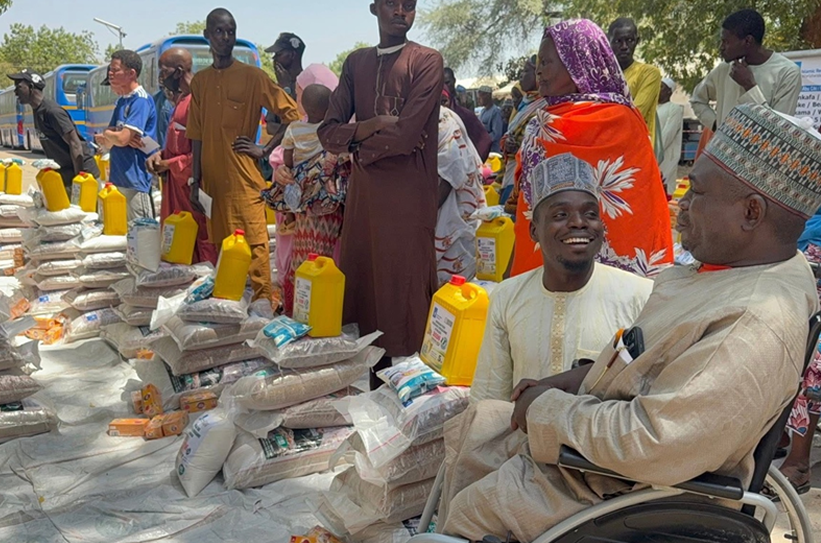
Rightsholders at the Ramadan Food Assistance Distribution in Nigeria
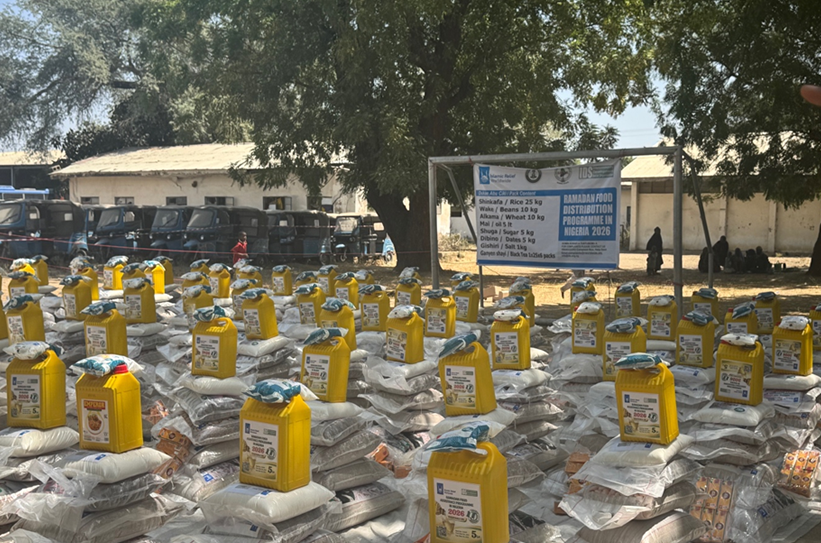
Rightsholders at the Ramadan Food Assistance Distribution in Nigeria

Leave a Reply
Want to join the discussion?Feel free to contribute!